

Share This
We were intrigued in mid-2009 when research documented that celiac disease, an immune system reaction to gluten, has increased four-fold in the past half-century. We covered the research in an earlier blog, but the question still left on the table was, “Why has celiac disease increased so hugely?”
We set out to find the answers, by combing through scientific research, and came across some interesting information that may fill in the holes – and may give hope to the estimated 1-3% of people who cannot digest gluten properly.
A little background first, before we share our research trove with you. Research shows that celiac disease and gluten sensitivity are distinct problems, and in fact there may be two main types of Celiac Disease. Gluten is a protein that’s found in wheat, barley, rye and triticale (a wheat / rye hybrid). It’s only found in these four grains – so people who have celiac disease or are otherwise gluten-intolerant still have plenty of great choices of whole grains to enjoy. Gluten-free does not mean whole grain-free!
Our romp through the research turned up evidence that today’s wheat foods are, most likely, higher in gluten, which may account for the increased problems experienced by a small fraction of the population. The good news, though, is that we also found research that suggests ways to lower the gluten levels in wheat-based foods. We’ll organize this blog according to our good news findings. (Note: some of these ideas may also apply to barley and rye, but the research we found centers on wheat.)
Consider Ancient Grains
Different types of wheat have different numbers of chromosomes, and some studies show that the older wheats, with fewer chromosomes, tend to have lower levels of gliadins, the type of gluten proteins that seem to cause most sensitivities.

Einkorn, the oldest known type of wheat in our current food supply, has just 14 chromosomes, and is called a diploid wheat. Durum wheat (the kind most often used for pasta) and emmer are tetraploid wheats, with 28 chromosomes. Common wheat (used for most everything) and spelt have 42 chromosomes and are known as hexaploid wheats. Research shows that different tetraploid and hexaploid wheat varieties differ widely in gliadin levels, and it’s possible to select “individual genotypes with less Celiac Disease-immunogenic potential.”
Even if you’re not gluten-sensitive, you may want to consider some of the ancient grains. Research shows that Kamut has higher levels of antioxidants than some modern wheats, and that healthy plant sterols are higher in tetraploid wheats than in hexaploid wheats.
Organic May Trump Conventional Growing
We all understand that the foods we eat can make a big difference in the composition and health of our bodies. The old saying “You are what you eat” applies to plants, too.

We uncovered one intriguing study that found that varying levels of sulfur and nitrogen fertilizer can change the proteins in wheat. Different proteins, different sensitivities. Is there, perhaps, a connection between the widespread introduction of chemical fertilizers after World War II, and the four-fold increase in Celiac Disease during the same period?
The jury is still out. We’d like to see research that takes the next step, and compares the proteins in conventionally-farmed grains with organic grains.
Try the Old Ways of Making Bread
Once you’ve grown and harvested the wheat, how you make your bread may affect its gluten levels, too. Throughout most of mankind’s history, bread was made using a sourdough process based on lacto-fermentation. The process was slow, and results were uneven, so when modern yeast became available, sourdough breads became less common.
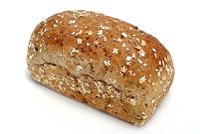
Now research shows us that lacto-fermentation of wheat has the potential to drastically reduce gluten levels. We found three studies along these lines. Our favorite study showed that sourdough bread produced with a particular strain of lacto-bacilli had gluten levels of 12 parts per million – where anything under 20 ppm is considered gluten-free. Bread made with the same wheat but without lacto-fermentation had gluten levels of 75,000 ppm.
Another cool thing about this study was that the Italian researchers lacto-fermented the flour, then dried it and used it in a conventional quick-baking process, one that could be compatible with modern bakeries. We love it when someone discovers ways to incorporate the best of the old ways into today’s realities – that’s what health through heritage is all about!
Share Your Thoughts and Your Research
I’m not a researcher – just a fascinated auto-didact – so some details of the studies cited here may have escaped me. I present the information above as speculation, and invite those doing actual research in this area to contact us with their latest findings. We’re excited by the range of research being conducted, and its potential for removing any barriers that stand in the way of all people being able to enjoy all whole grains! (Cynthia)
Comments
It's unlikely that gluten intolerance has just one cause, as your experience indicates. Another issue could be overall changes in your gut bacteria based on your overall diet or on environmental pollutants. It's likely that the balance of "good" and "bad" bacteria in your gut -- so essential for digestion -- have changed substantially in the ten years since you moved from Africa to the UK. Thanks for writing, and we hope your health improves with the right diet.
Our research shows that Roundup is indeed used pre-harvest. The idea, apparently, is to help a field dry out and become ready for harvest more uniformly. Plants naturally grow at different rates; applying glyphosphate (Roundup) apparently doesn't affect those already past a certain maturity, but is taken up by grains still growing, so that they stop growing/taking up new moisture. Guidelines are that Roundup should not be applied any closer than 7 days before harvest. For those concerned by this practice, organic wheat is a good option.
Yes, einkorn as an entire species is a diploid (14 chromosomes). All varieties within the species would have the same number of chromosomes.
Adding vital wheat gluten would certainly "juice it up" a little, but the jury is still out on whether or not that is a good approach. This article, which won a James Beard Foundation Award for journalism, explains this issue more in depth: http://www.newyorker.com/magazine/2014/11/03/grain
See also our article on whole wheat baking: http://wholegrainscouncil.org/newsroom/blog/2015/04/expert-shares-tips-for-baking-with-whole-grains
Dear Chris,
No, whole grain wheat, rye and barley and foods made with them are also off-limits to people with gluten intolerance and celiac disease. But there are so many other grains you can enjoy!
Cynthia
Digestive problems like yours can indeed be challenging. Dietary approaches to fructose malabsorption can vary, so we can't begin to offer specific dietary advice to you. However, we do know that the ratio of fructose to glucose matters for some people, and the total fructose load may also matter.
Dear Nancy,
Unfortunately I don't know where you can purchase the lactobacilli (and fungi) in the Italian study.
But if you are sure your kids do not have celiac disease and you think they are "somewhat gluten intolerant" -- which implies that gluten doesn't always cause enormouse health problems for them -- you have a little leeway to experiment with seeing which kinds of wheat and what sourdough starter they can best tolerate.
Here's an interesting link on sourdough breads at celiac.com.
Some people who are intolerant to wheat are actually reacting to other components of the wheat (fructans, ATIs, etc.). It's interesting that sourdough processing apparently cuts down the fructans in wheat, as well as the gluten. Fructans may be another culprit for food sensitivities in some people. (Sometimes people think their problem is gluten and it turns out to be something else also in some of the same foods. Check out the FODMAPS elimination diet.)
Hope this helps. (Cynthia)
We talk about “gluten” as if it’s one thing, but in fact gluten is made up of two main groups of proteins called “gliadins” and “glutenins.” During digestion, both of these break down into smaller units called peptides, made up of strings of amino acids. Different people may be sensitive to different peptides, so this could explain your intermittent reactivity.
For most people, gliadins may be most problematic. Researchers categorize gliadins as type A, B or D (don’t know what happened to C!). Gli-D2 is thought to be the most celiac-inducing. Einkorn (the most ancient kind of wheat commonly available) and Durum wheat (also with fewer chromosomes than common wheat) apparently do not have the D-type of gliadin; Einkorn has only A and Durum just A+B. There is actually research under way to breed varieties of wheat that may be safer for people with such sensitivities
However, if you have a particular problem with pasta – which is normally made from Durum wheat – I would guess that Gliadin-D is not your problem. Although we are in no position to give medical advice, you may want to try Einkorn to see how that works for you, as an experiment. Good luck with finding a solution. (Cynthia)
Do you have any reaction to foods other than wheat? You might be having a poor digestion of carbohydrates in general. Have you been tested for acid reflux disease? You mentioned that you had feeling of stuffed throat , that is frequently associated with acid reflux. Acid reflux is in most cases caused by malabsorbtion of carbohydrates, some worse than others. You might want to do an elimination diet, eliminating all grains for 2-3 weeks and then reintroducing them gradually and observing the reaction. Hang on there, there is always hope.
Thanks for weighing in. As we always say, listening to your body and learning what works for YOU is important. I'm glad you've found an approach to eating well that suits you.
We agree, Nancy. There is intriguing evidence -- in fact, from the same team that first identified "gluten sensitivity" as an issue separate from celiac disease -- that the real issue may be FODMAPs and not gluten for many people. See this article, for example: www.celiaccommunity.org/celiacmd-fodmaps/
We're glad to hear that you're enjoying better health the last few weeks. If you could "eat organic flour just fine" then it could well be that you're sensitive to some other component in flour other than gluten. Just a thought; we wish you the best in getting to the bottom of your health issues.
Hi Lee. I was unable to find any information about the glycemic index of einkorn. You may be interested to look at these two studies, however:
This study shows no difference in glycemic impact between spelt and regular wheat bread.
This study shows rye to have a lower glycemic impact than whole wheat (or white) bread.
In terms of glycemic impact, just about any bread is going to be a good choice if your flour has a larger particle size (you're grinding it yourself), you're using a sourdough culture (again, has been shown to lower glycemic impact of bread) and you're using a whole grain. Rye seems to have some extra evidence -- maybe because studies may have been done in Scandinavia where it's common to make bread primarily from intact, soaked rye berries (not ground up into flour). So maybe you want to stick with the rye, or consider adding some soaked or sprouted grains. Hope this helps.
Interesting. We look forward to seeing your book when it's done. An important topic!
The report you referred to in your opening sentence prompted me to do some research as well. In 1948 Norman Borlaug was commissioned by the Rockefeller Foundation to increase yields in cereal grains. He was so successful that he has been called the "father of the green revolution." It is said that he created multiple thousands of wheat varieties by 1960. In the 1970's new hybridization techniques encouraged even more activity. The techniques altered the plant's dna with the use of chemicals, x rays and gamma rays. A wide variety of sources claim over 40000 varieties of wheat were developed in the last half of the twentieth century. A FOIA request identifed over 500 applications for plant variety protection were made between 1970 and 2000 and at least another 2000 + varieties were used in the review of the applications. The above information clearly establishes that a large number of wheat varieties were created by man in the last 60 years and they had not been in existence before that time. The identification process used to establish varietal difference is to isolate the gliadin protein (considered the most toxic protein by celiac researcher and one singled out as a significant contributor to exercise induced analphylaxis reactions as the result of ingestion of wheat). Each one of those varieties receiving Plant Variety Protection showed significant diffeences in their electrophoresis mapping of that gliadin protein. Celiac researchers have also found that non celiac individuals could be reacting to amylase inhibitors and trypsin inhibitors.Symptoms are oftentimes called IBS. Strangely enough, amylase inhibitors, a protein, is also said to be a main contributor to symptoms known as baker's asthma. The enzyme inhibitors are created by the plant in an effot to protect its progeny (common wheat kernels) from insect activity.Whereas ancient Hulled grains like einkorn, emmer and spelt have little need to produce enzyme inhibitors because of the impermeable hull that surrounds the kernels. Lastly, FODMAPS (fermentable oligosaccharides,disacchaides, monosaccharides and polyols) are short chain sugars which are plentiful in wheat but are found on minute quantities in ancient grains like spelt. These, too, are said to contribute to symptoms associated with IBS. Man seems to find it necessary to try to improve on nature; just as Norman Borlaug did; but even the father of the green revolution failed to realize that in his efforts to preserve better yield by making semi dwarf varieties of the plant he also inhibited the ability of the plant to take up minerals in a way comparable to the wheat that had been targeted to be improved.
Thanks for your indepth comments, Don. As you point out, there are many different factors involved here.
On enzyme inhibitors, for instance, Dr. Detlef Schuppan has done some great research on the amylaze trypsin inhibitors (ATIs) in wheat which seem to be responsible for some people's problems eating wheat. ATIs are natural pest-resistant factors, so breeders have tried to increase them, in an honorable effort to cut down pesticide use. Unfortunately, at the same time that ATIs make it harder for pests to eat the wheat, they may make it harder for us too.
We're learning more and more about these issues every day. (Cynthia)
It was shocking to see the reports on the rapid increase of celiac diseases. Many researches and studies were conducted to find the reason behind the cause of this rapid spread of celiac diseases. Thanks for sharing the research results on celiac diseases.
Keep in mind that the increase in celiac disease is paralleled by increases in other auto-immune diseases. This is about the bigger issue of our immune systems gone awry -- not celiac alone.
My ENT told me I was Gluten Intolerant... Turns out I'm only intolerant to commercial grow brands of wheat in the U.S. I can eat organic wheat with NO issues! What have we done to our wheat that is making so many sick??????
If you can eat organic wheat but not conventionally-grown wheat, it sounds like you're sensitive to some of the pesticides or herbicides used on the wheat rather than to the wheat itself. (Often the same varieties of wheat are grown organically and conventionally). In any event, we're glad you found a solution that enables you to continue to enjoy healthy whole wheat.
Refined flour is fortified/enriched -- but whole wheat flour is not allowed to be fortified or enriched in the US. Yet another reason to stick with whole grains!
Pages
Add a Comment