

Share This
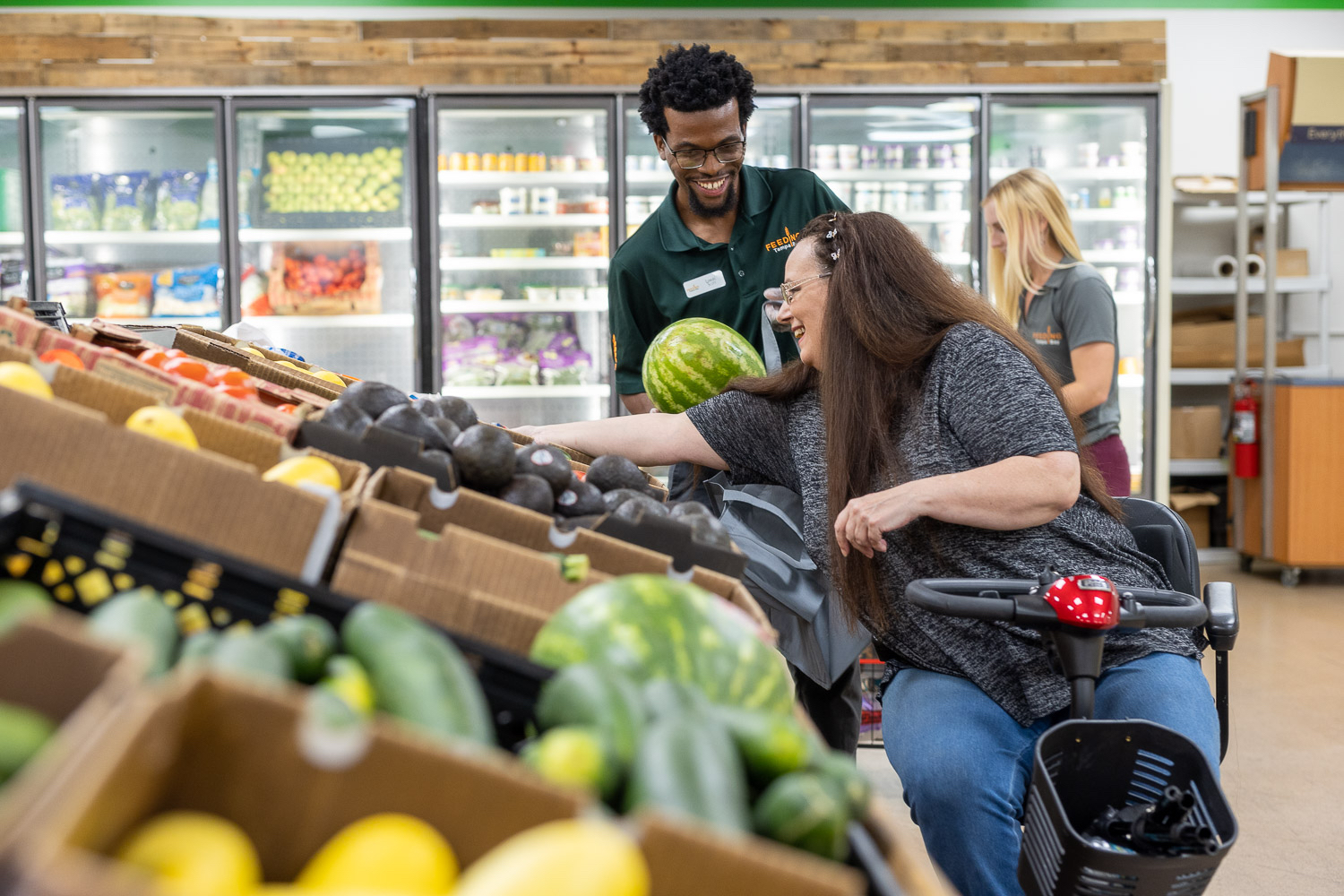
During this year’s Whole Grains Month celebration, the Whole Grains Council coordinated a donation of whole grain products to a consumer-nominated food pantry. Thanks to our members’ support, Feeding Tampa Bay, a leading organization in the fight against hunger in West Central Florida, received a donation of whole grain products to help stock their pantries and community markets.
The consumer who nominated them said:
“I nominated Feeding Tampa Bay because of all the work they do by serving 10 counties in West Central Florida. They are using innovative approaches to address local challenges and have a holistic approach to hunger. They work to address underlying causes, such as employment and health by offering wraparound services. I love how they are redefining the traditional role of food banks to address food security. You can tell they care about people.
We spoke with Shannon Hannon Oliviero, their Director of Public Affairs, about how the organization is redefining what it means to feed a community by pairing nutrition and dignity with compassion and connection.
1. Can you tell us a little about the mission of Feeding Tampa Bay and how you addresses food insecurity in the community?
Shannon: Approaching food insecurity through the lens of health is pivotal for us. Feeding Tampa Bay has been around for more than 40 years, and over the last decade, we’ve really shifted our focus toward nutrition—fresh produce, healthy grains, and lean proteins.
A few years ago, we realized we couldn’t solve food insecurity as a food bank alone. Food is just one piece of the puzzle. That’s why our new 215,000-square-foot facility is designed not just for food storage and distribution, but for community connection. About 30% of the space is dedicated to the public, including an onsite cafe and a free grocery store sponsored by Publix that looks and feels just like a regular supermarket.
When someone walks through our doors, we don’t just ask, “How can we feed you?” We ask, “How else can we help you?” Whether that’s connecting them to healthcare partners, job training, or financial literacy resources, our goal is to help people achieve long-term stability.
2. How has the landscape of food insecurity changed in Tampa Bay, particularly post-pandemic?
Shannon: The pandemic really changed everything. It showed us that food insecurity doesn’t have one face, any of us could be one major life event away from struggling to pay the bills. During that time, we distributed around 91 million meals. After the core pandemic years (2020-2021), we increased our output to 100 million meals per year as part of our effort to make our community “hunger free,” and it still wasn’t enough. That was a turning point for us. We realized we needed to do more than distribute food. We had to focus on health. Our new facility includes an 11,000-square-foot kitchen where we prepare healthy, ready-to-eat meals like quinoa and ground turkey–stuffed peppers. During hurricane season, we produced more than 40,000 meals for families without power.

Now we’re partnering with healthcare providers to launch medically tailored meal programs for people managing conditions like diabetes or heart disease. Food is medicine, and we’re embracing that idea in every part of our work.
3. What do you see as the future of food security in Tampa Bay, and how can organizations like Feeding Tampa Bay continue to evolve to meet the changing needs of the community?
Shannon: The future of food security lies in collaboration, especially between hunger-relief organizations and healthcare systems through that food-is-medicine approach. Our healthcare partners recognize that investing in food access can prevent people from ending up in the emergency room. We’ve partnered with BayCare to create “Healthy Bags” for patients leaving the hospital, filled with foods that match their medical needs. Those patients are also connected directly to our pantries for continued support.
We’re also growing our Healthy Pantry Network, equipping local partners with refrigerators, freezers, and shelving so they can store and distribute fresh, culturally relevant foods safely. Every pantry is designed to feel like a small grocery store because choice is dignity, and dignity is key to health.
4. What role do local farmers, producers, or other stakeholders play in supplying whole grains to the families you serve?
Shannon: Local farmers are essential partners for us. Many work through state programs that redirect perfectly good food, including whole grains, that might otherwise go to waste. We’re a food-rich country; we just have to approach things the right way. We also run a mobile grocery store that accepts EBT and sells nutritious foods at near-wholesale prices. Some people just want to stretch their dollars. This gives them that opportunity while ensuring access to wholesome, affordable food.
5. What advice would you give to families who are trying to stretch their food budget but still want to include more whole grains in their meals?
Shannon: My biggest piece of advice is: reach out for help. Every county in the U.S. has a Feeding America partner, and these are welcoming, judgment-free spaces that focus on health and dignity. It is our privilege to be there to help you in your time of need, and to connect you with services you qualify for.
Pantries like us also provide tools to help families make the most of what they have, like recipe cards, nutrition education, and simple cooking videos. We want people to feel empowered to make healthy meals at home, even on a tight budget. It’s amazing what you can do with a bag of brown rice or whole-grain pasta once you know how to season and prepare it.
6. Are there any budget-friendly, easy-to-make whole-grain recipes or meal ideas that you recommend to people?
Shannon: Absolutely. Inside our free grocery store, we have an entire wall of recipe cards that change weekly based on what’s available—grains, veggies, proteins, you name it. If someone’s never cooked butternut squash before, we show them how easy it can be: just toss it with olive oil, salt, and pepper. The same goes for grains, like cook brown rice in broth, or add herbs to quinoa for flavor. We also share quick cooking videos online to show that healthy food doesn’t have to be complicated or expensive. We want people to know they can do this.
7. In your experience, what are some of the biggest barriers that families face when trying to incorporate more whole grains into their meals?
Shannon: Access and budget are real challenges, but education is the biggest one. A lot of families just don’t know how to cook whole grains in ways that taste good. I’ll admit, I used to not like brown rice; but then I learned how to make it flavorful. Cooking it in broth, adding a sprinkle of cheese or spices, totally changes it. Whole grain couscous is another great option; it’s quick, versatile, and affordable. Once people learn to make these foods taste great, they start to enjoy them. And that’s when they become part of everyday meals.
We’re grateful to Feeding Tampa Bay for taking time to share their ongoing commitment to nourishing their community with both food and compassion. Their holistic approach reinforces how powerful local action can be in creating lasting change. If their mission resonates with you, we encourage you to get involved with your local food pantry or Feeding America partner. Whether through volunteering, donating, or visiting for yourself, every effort helps bring healthy, whole grain options to more families nationwide. (Vik)
To have our Oldways Whole Grains Council blog posts (and more whole grain bonus content!) delivered to your inbox, sign up for our monthly email newsletter, called Just Ask for Whole Grains.
This interview has been edited for clarity.
Comments
Add a Comment