

Share This
Positive perceptions around the taste and flavors of whole grains are growing rapidly, according to our latest survey. Our 2025 Whole Grain Consumer Insights Survey, a census-representative survey of 1500 American adults, found many indicators that consumers are increasingly seeking whole grain foods, not only for their health benefits, but also because consumers see them as tasty and sustainable.
Every few years we comission a survey to ask consumers about their whole grain eating habits and perceptions so that we can understand what people know, find out what barriers exist, and measure the progress we’ve made in pushing that needle in the right direction. The findings this year show clear trends in demand for whole grain products, in the role that price and labeling play in purchasing decisions, and in the trust that people place in third-party packaging symbols like the Whole Grain Stamp.
Here are five of the major trends and takeaways from the survey:
1. Increasingly, consumers choose whole grains for their great taste
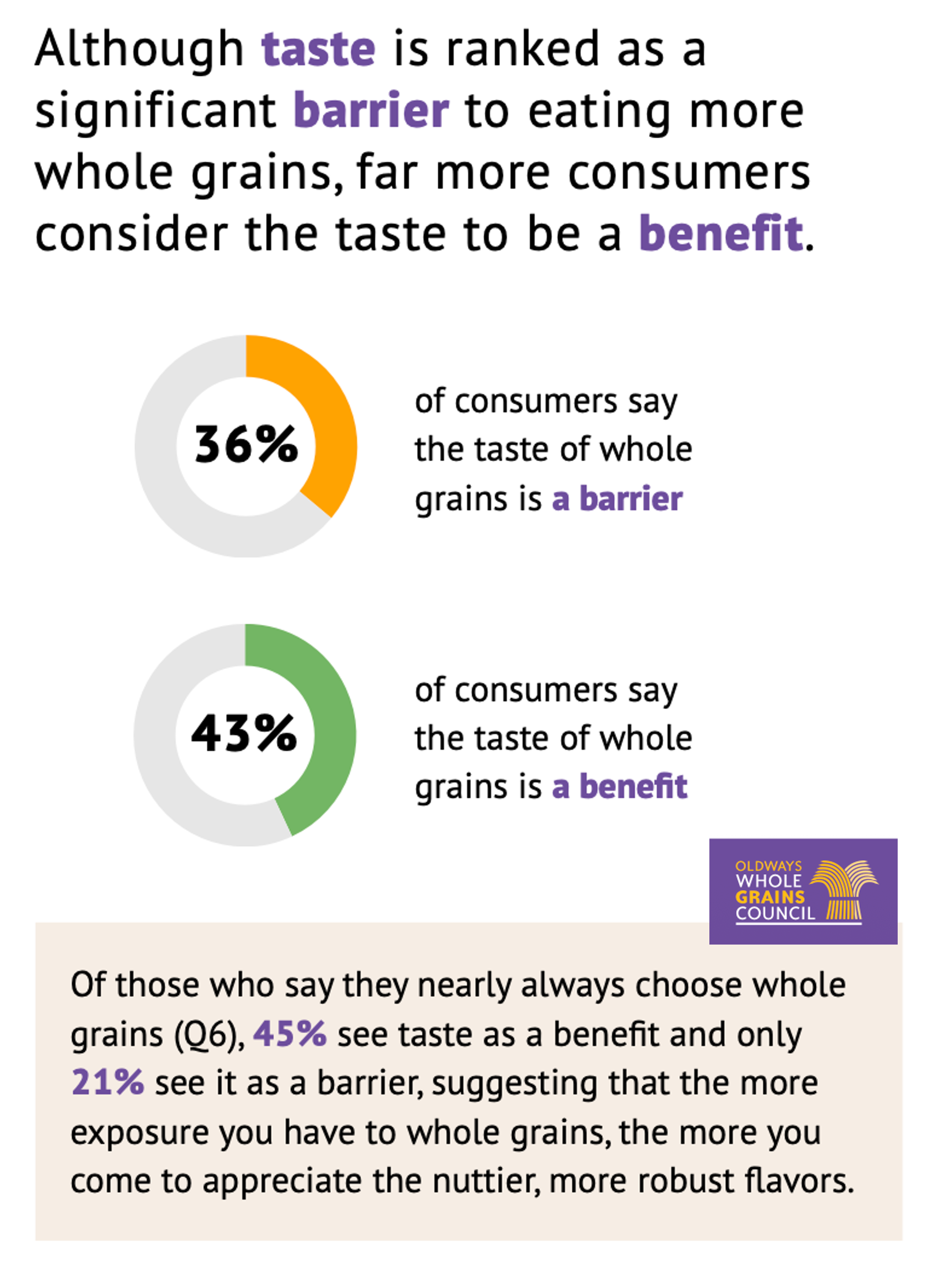
The share of consumers choosing whole grains for their superior taste has been steadily growing, thanks in part to the wider availability of flavorful whole grain products and menu items. This year, 43% of consumers said taste is a reason they choose whole grains—up from 39% in 2023—indicating that positive perceptions of flavor are gaining ground. Today, more people appreciate the fuller, nuttier flavor of whole grains foods (43%) than see it as a barrier to eating them (36%), signaling a meaningful shift in attitudes. This trend reflects not only improvements in product development but also greater exposure to whole grains in restaurants, school meals, and grocery store choices. As consumers become familiar with the diverse flavors and textures of whole grains, they are increasingly viewing taste as a compelling reason to choose whole grains rather than a hurdle to overcome.
2. Parents and Millennials drive the strong and growing appeal of whole grains
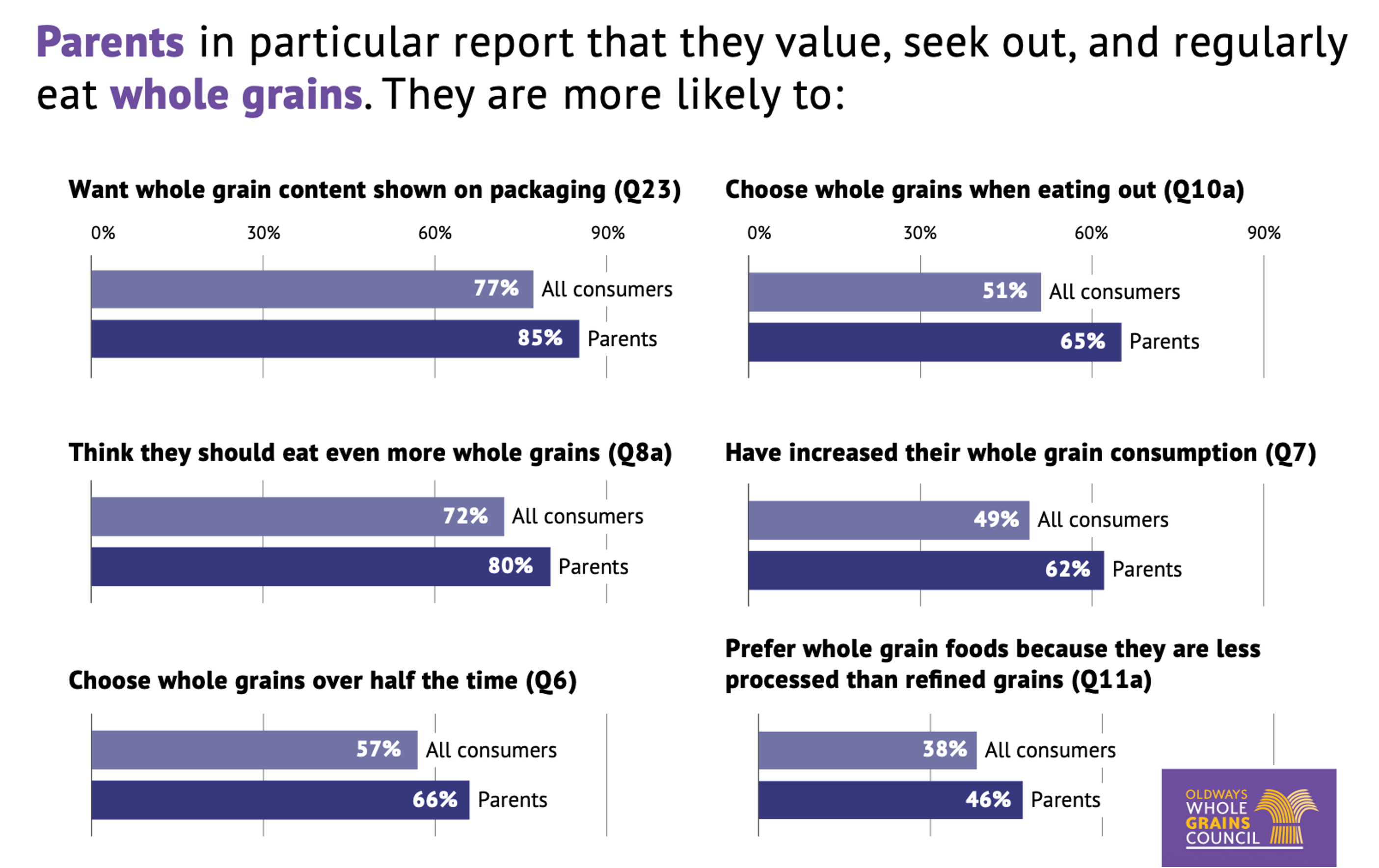
American consumers are increasingly seeking out whole grain foods, with 57% reporting that they choose whole grain options at least half the time and nearly three-quarters (72%) telling us they’d like to eat even more. Whole grains are a stronger driver of food choices than fiber alone. Parents with children at home lead the way on whole grain consumption, with 66% saying they choose whole grains at least half the time, followed closely by Millennials (62%). Dining out is no exception, with 51% of consumers now choosing whole grain options at least somewhat often, a figure that climbs to 65% for parents with kids at home, and 62% for Gen Z and Millennials.
3. Affordability perceptions around whole grains are improving, but cost remains a barrier for some
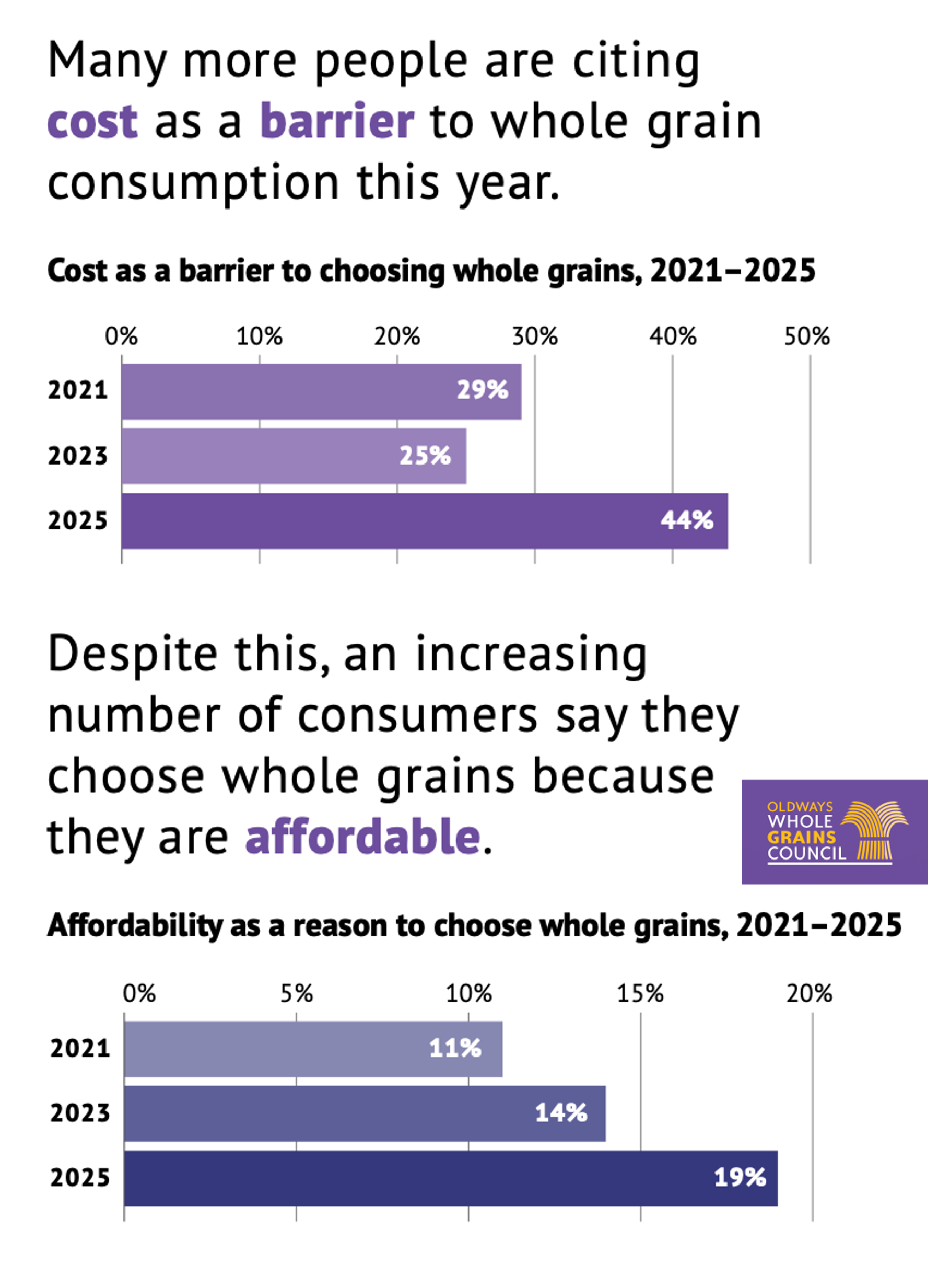
Consumer perceptions of whole grain affordability are steadily improving, with nearly one in five (19%) now choosing whole grains because they see them as budget-friendly—up from 11% in 2021. This positive shift suggests that more people are recognizing the value whole grains bring to their diets, not only in terms of nutrition but also in terms of cost. At the same time, recent inflation and rising food prices have taken a toll, and cost is increasingly cited as a barrier to whole grain consumption. In 2021, fewer than one in three consumers (29%) said price limited their choices, but this year that number has grown to 44%. These dual trends highlight the complexity of consumer decision-making. To help make whole grains more widely accessible, it may be especially important to focus on strategies such as creating price parity between whole and refined grain foods, expanding private-label options, and improving consumer awareness of budget-friendly whole grain staples.
4. The Whole Grain Stamp builds trust and influences consumer behavior
We are proud to report that 84% of consumers trust the Whole Grain Stamp. In fact, the Whole Grain Stamp is viewed as the second more useful packaging label on the market after the Nutrition Facts Panel, and it far outpaces content claims made on-pack by manufacturers without independent certification, which only 47% of consumers trust. Trust in the Stamp translates directly to purchasing decisions. This year, 81% of shoppers say the Stamp makes them more likely to buy a product (up from 78% in 2021). Conversely, if a product doesn’t carry the Stamp, a majority of consumers (56%, up from 51% in 2021) say they’re skeptical of any whole grain claims on its packaging. Consumers also see the Stamp as a driver of positive change: half (50%) believe using the Stamp is one of the best ways to encourage people to eat more whole grains.
5. There is strong consensus that whole grains should play a big role in children’s diets
This year’s survey reveals strong support for healthier school meals, with 82% of respondents agreeing or strongly agreeing that schools should prioritize improving nutrition quality. This broad consensus underscores the recognition that schools play a vital role in shaping children’s lifelong eating habits. The survey results also highlight a shift in perceptions around children’s eating behaviors. Ninety percent of parents agree that children will eat whole grains when they are prepared in a tasty and appealing way, signaling a move away from the outdated belief that kids simply do not like whole grains. There is growing understanding that preparation, presentation, and repeated exposure are key drivers of acceptance among both kids and adults. Reflecting this, 80% of respondents agreed or strongly agreed that if children are exposed to whole grains from a young age, they are more likely to continue those habits into adulthood.
Review our full 2025 Whole Grain Consumer Insights Survey Report and let us know in the comments below which statistics stood out most to you. (Caroline)
To have our Oldways Whole Grains Council blog posts (and more whole grain bonus content!) delivered to your inbox, sign up for our monthly email newsletter, called Just Ask for Whole Grains.
Add a Comment