

Share This
Decades of research show that whole grains are healthy and are linked with a reduced risk of many diseases like heart disease, stroke, and colorectal cancer. This is well established and Americans are getting the message.
But let’s take a step back. When nutrition scientists are studying the health benefits of whole grains — or any food for that matter — how do they do it, and which foods are they using?
There are two main categories of nutrition studies. The most common type is observational. In these studies, groups of people are followed over periods of time and throughout the study period, scientists monitor their eating habits and check in to see how their health is progressing. The Nurses’ Health Study is a famous example of this type of data collection.
The other type of study is a randomized controlled trial (“the gold standard” of nutrition research), in which participants are randomly assigned to various diets for a select period of time. Randomized controlled trials are extremely cost prohibitive to conduct in the real world, as they require a large enough group of people to be able to see changes over months, years, or even decades, depending on the desired outcome. These studies do exist but are not as widely utilized as some might hope. (See this webinar with whole grain researcher Dr. Andrew Ross to learn more.)
Because it is very expensive and very difficult to force hundreds or thousands of people to eat one way or another for a long enough period to see impacts on cardiovascular disease, mortality, etc., observational studies are a much more useful tool for nutrition research. Although observational studies can only show correlation (not causation), correlation is a useful scientific principle, and dismissing correlation entirely (by dismissing observational studies) is a missed opportunity to learn more about our health and our bodies. The tobacco industry abused this principle to argue that smoking does not cause lung cancer, because correlation is not causation. Yet even though no one will ever do a clinical trial requiring one group to smoke and the other to abstain, we know that quitting smoking is a healthy move, and we know that based on observational studies.
While correlation alone does not prove causation, multiple correlations from well-designed studies that all reach the same conclusion can be sufficient — especially when combined with biological plausibility. For example, if studies show whole grains are associated with heart health, and lab tests show whole grains make blood vessels more flexible, this offers a solid biological basis for the correlation. (To learn more about the value of correlation and how to interpret those findings, we recommend The Book of Why by computer scientist and Alan Turing award winner Judea Pearl and PhD mathematician Dana Mackenzie.)
So when studies show that whole grains are healthy, which whole grain foods are they talking about? Most of the studies demonstrating the health benefits of whole grains are observational, meaning that study participants aren’t receiving special foods. They are just ordinary people like you and I shopping at ordinary grocery stores.
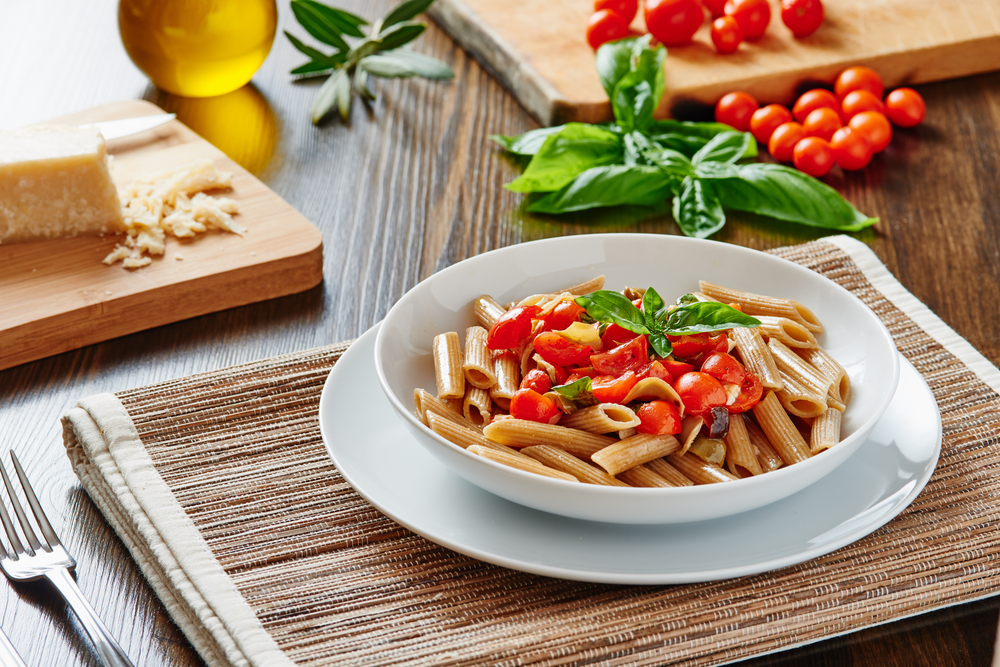
The top sources of whole grains in these studies are the same whole grain foods that the rest of us are eating. Specifically, breads and breakfast cereals make up more than half (58%) of whole grain foods eaten, followed by popcorn and grain snacks (12%), oatmeal (11%), and pasta and rice (6%). In other words, because breads and breakfast cereals are the most common sources of whole grain in the American diet, many of the studies demonstrating a link between whole grain consumption and lower risk of chronic disease are looking at these very foods.
Grains do behave differently in the body depending on how they’re processed and what they’re paired with. For example, whole grains tend to have a gentler impact on blood sugar when they are eaten in larger particle sizes (like steel cut oats or wheat berries) compared with smaller particle sizes (like finely ground flours). But blood sugar response is just one aspect of overall health, and an imperfect one at that. After all, most grain foods are not eaten in isolation, and what a grain food is paired with changes the blood sugar response so completely that the glycemic index of an individual food is hardly useful. Not too many people are out there eating empty sandwiches with no filling between the bread or plain bowls of rice with nothing else in them.
Additionally, this doesn’t negate the fact that study after study demonstrates that even if the whole grain breads and cereals that people are eating may be more highly processed and may have small amounts of sugar or salt added to them, they are still associated with health benefits. It’s certainly possible that intact whole grains like quinoa or farro may have even greater benefits. But as the research stands, there is solid evidence supporting the benefits of foods like whole grain breads and cereals as they’re eaten today.
Whether you enjoy your grains intact, like a wheat berry, or ground into smaller pieces, like whole wheat flour, both forms count towards your whole grain intake. If you’re unsure if a particular research study counts a particular food as “whole grain” or not, you can look at the methods section of the paper or contact one of the authors to be sure. (Kelly)
To have our Oldways Whole Grains Council blog posts (and more whole grain bonus content!) delivered to your inbox, sign up for our monthly email newsletter, called Just Ask for Whole Grains.
Comments
Add a Comment