

Share This
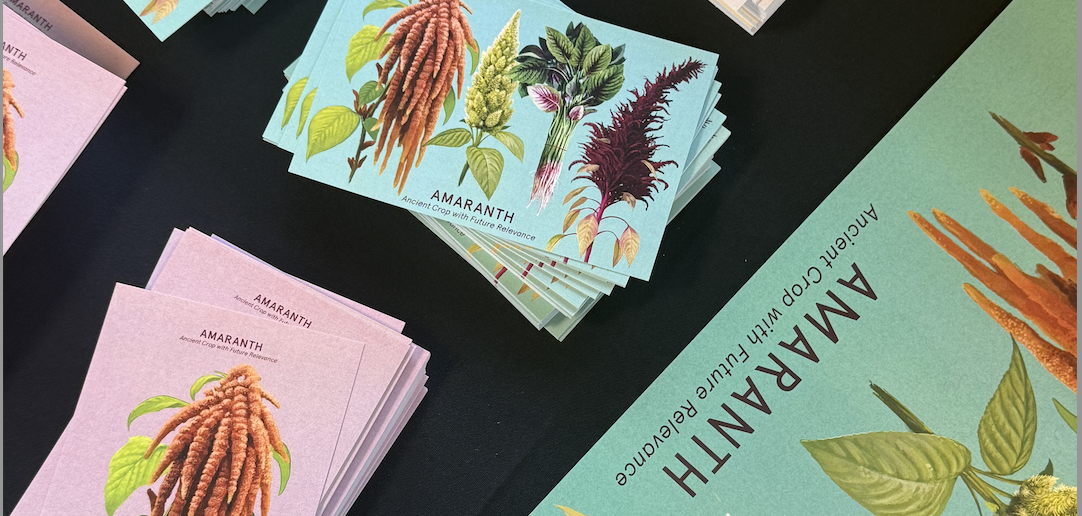
Earlier this month, we attended and presented at the Amaranth Institute Symposium in Washington State—an intersectional gathering of professionals with an interest in amaranth. The 2-day symposium was dedicated solely to amaranth (with an honorable mention to quinoa), digging into current research projects, amaranth’s rich history, and opportunities for use in products in the food sector and beyond.
Amaranth holds a special place in the agricultural history of the Americas as one of our indigenous grains. Originally domesticated in South and Central America thousands of years ago, amaranth quickly spread to the Southwest of the modern day USA and became a staple grain for indigenous communities. A resilient and adaptable plant, amaranth then made its way around the world, becoming an important crop across Asia, Africa, and the Caribbean islands.
All over the world, researchers are returning to amaranth to study its resilience against climate change, and its variety of nutritional benefits and culinary uses, including the fact that people can eat both the seeds and the greens. Amaranth is an opportunity crop, which the Crop Trust describes as “plant species that open opportunities to improve food and nutritional security, but that are not used to their full extent due to factors like limited awareness, lack of information, or competition with more dominant species.”
Amaranth is a friend to a changing climate
Some of the most promising findings are around amaranth’s remarkable adaptability to climate variations. Recent research has found that amaranth can grow and thrive across an extremely wide range of environments. It thrives in rainforest conditions, mountainous regions, and arid drought simulations alike; this chameleon nature means we may come to rely on amaranth as climate change disrupts our current food systems.
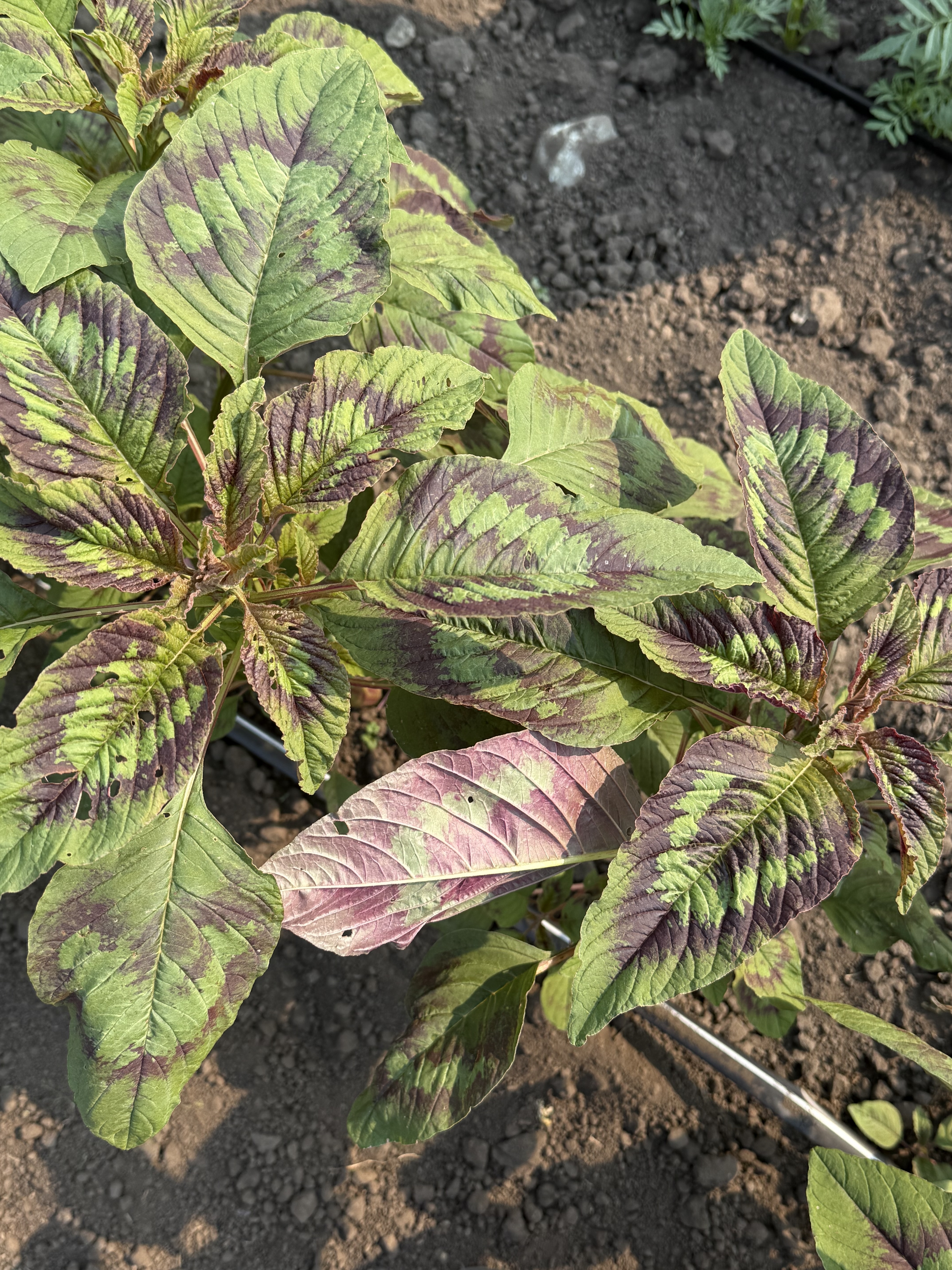
Across recent research, amaranth has thrived in:
- Wet, river bottom environments in Tennessee
- Drought-simulating greenhouses in Tennessee and Iowa
- In the coffee growing tropics of Quindío, Colombia
- Simulated urban raised bed environments in North Carolina
- Field trials in Sundarbazar, Lamjung, Nepal
Tended to in fields and greenhouses in universities and farms all over the world, amaranth has displayed resilience against weather while still delivering significant crop yields of its leaves and grain. It’s extremely efficient at using water and has some intrinsic drought-response mechanisms, like its status as a C4 plant, which helps it fix carbon in high-temperature and low-moisture environments. This allows it to adapt to a wide range of growing conditions, do well in a variety of elevations, and continue growing when there’s less water. Increasing crop diversity is a popular, tested method for improving agricultural resilience, and amaranth offers one stellar example of a crop that could complement monocrops in areas impacted by climate change. Instead of just replacing conventional grains, amaranth can provide an additional tool for building more resilient and diversified food systems.
Amaranth is delicious and nutritious
Our presentation at the Amaranth Symposium focused on consumer recognition of amaranth, messaging and communication strategies, and opportunities for amaranth product development. We also provided many tips and tricks around cooking with amaranth! For a quick recap, we usually advise that when cooking, amaranth is unique and differs from larger grains like rice, sorghum, or wheat grains. Because the grains are so small, we think they’re not the best fit for dishes that call for a firm, separate grain, like pilafs or grain salads. Instead, amaranth shines in creamy porridges, polenta-style dishes, and stews, where its texture and thickening ability are a boon to the finished dish. It can also be popped for a quick, high protein, whole grain, family friendly snack! We added popped amaranth on top of our pizzas for an added nutritious crunch.

There were many chances for symposium attendees to eat amaranth in a wide variety of dishes, courtesy of chef Lauren Chandler and the Washington State University Bread Lab. Attendees made pizza at the Bread Lab, with 80% whole wheat and 20% whole amaranth flour, topped with sautéed amaranth greens, popped amaranth grains, and young amaranth sprouts. We also snacked on fresh amaranth crackers, sweet amaranth and popcorn snacks, and traditional Mexican alegría (a popped amaranth and honey bar).
We learned that researchers from Colegio Pos-Grados Puebla are working to increase amaranth consumption in the Puebla region of Mexico, which accounts for 50% of the amaranth grown in Mexico. They noted that amaranth was an extremely nutritious and versatile plant already growing in many farming fields, but that it was largely underconsumed by indigenous farming communities. After providing culinary education around preparation, and tools for amaranth grain popping and processing, they reported an increase in consumption and are building a model to expand into other amaranth producing areas in Mexico.
Here in the USA, our research shows that consumer recognition of amaranth is still on the low side, which means there are endless possibilities for the resurgence and future of amaranth. If you’re curious about amaranth, you can look at our free recipes for inspiration, or learn more about its history through our resources!
- Vik Bensen, Program Manager, Whole Grains Council
To have our Oldways Whole Grains Council blog posts (and more whole grain bonus content!) delivered to your inbox, sign up for our monthly email newsletter, called Just Ask for Whole Grains.
Add a Comment