

Share This
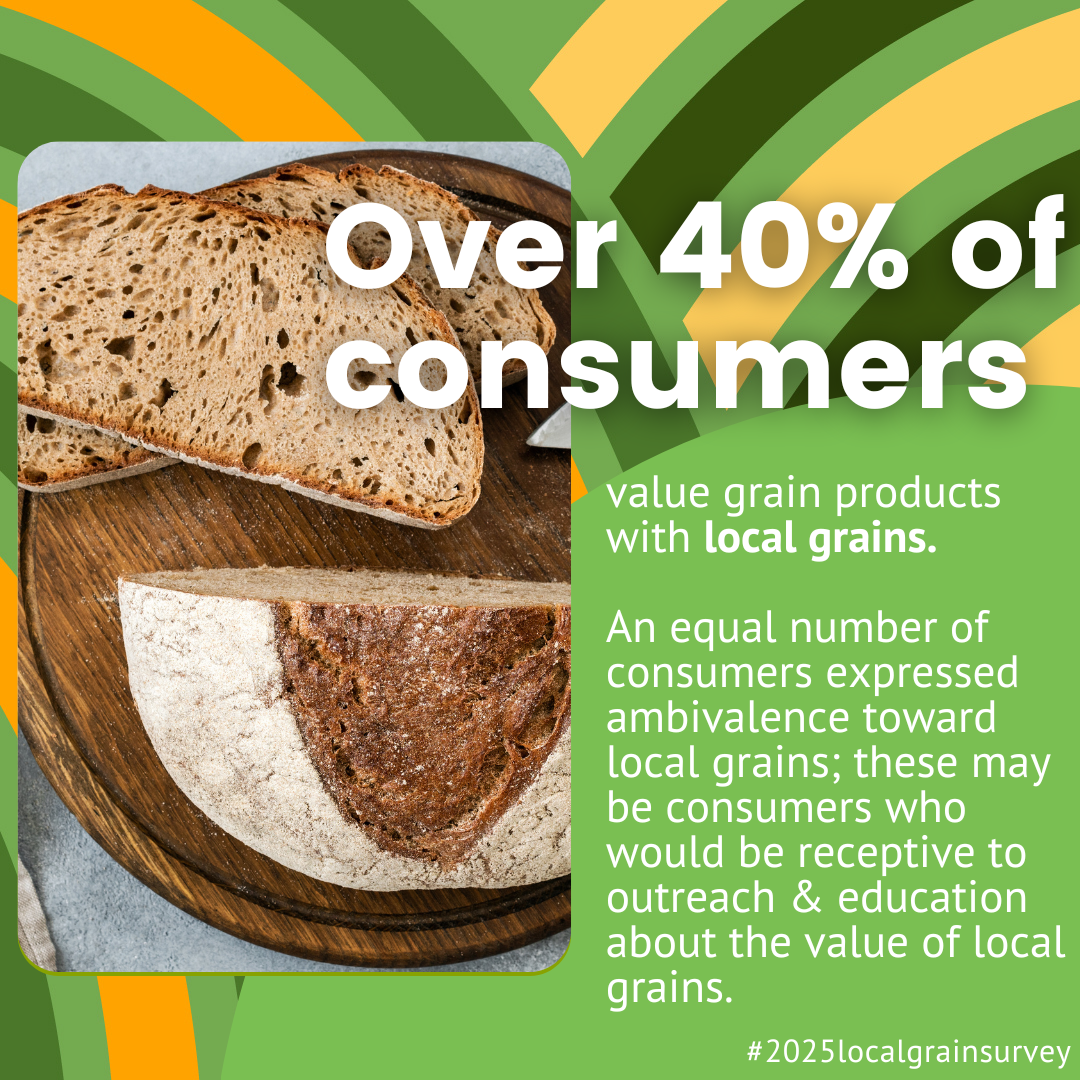
If you’ve ever wondered what shoppers prioritize when they’re choosing flour, pasta, or pancake mix, you’re not alone. This year, we teamed up with the Artisan Grain Collaborative (AGC), and researchers from the College of Food, Agriculture, and Natural Resource Sciences at the University of Minnesota (UMN) to dig into that very question. We commissioned a survey of 1,500 U.S. adults – most of them the primary grocery shoppers for their households – to get a clearer picture of how people understand, value, and buy grains. A subset of questions, developed by a team from UMN and AGC, focused on local grains.
The result has been a fascinating snapshot of what motivates consumers, what holds them back, and where big opportunities lie for farmers, food businesses, and retailers. One of the biggest takeaways is that while 41% of consumers say they care where their grains are grown and value local grains, another 41% feel neutral, and 17% actively don’t prioritize it. So, interest in local grains is solid, but far from universal.
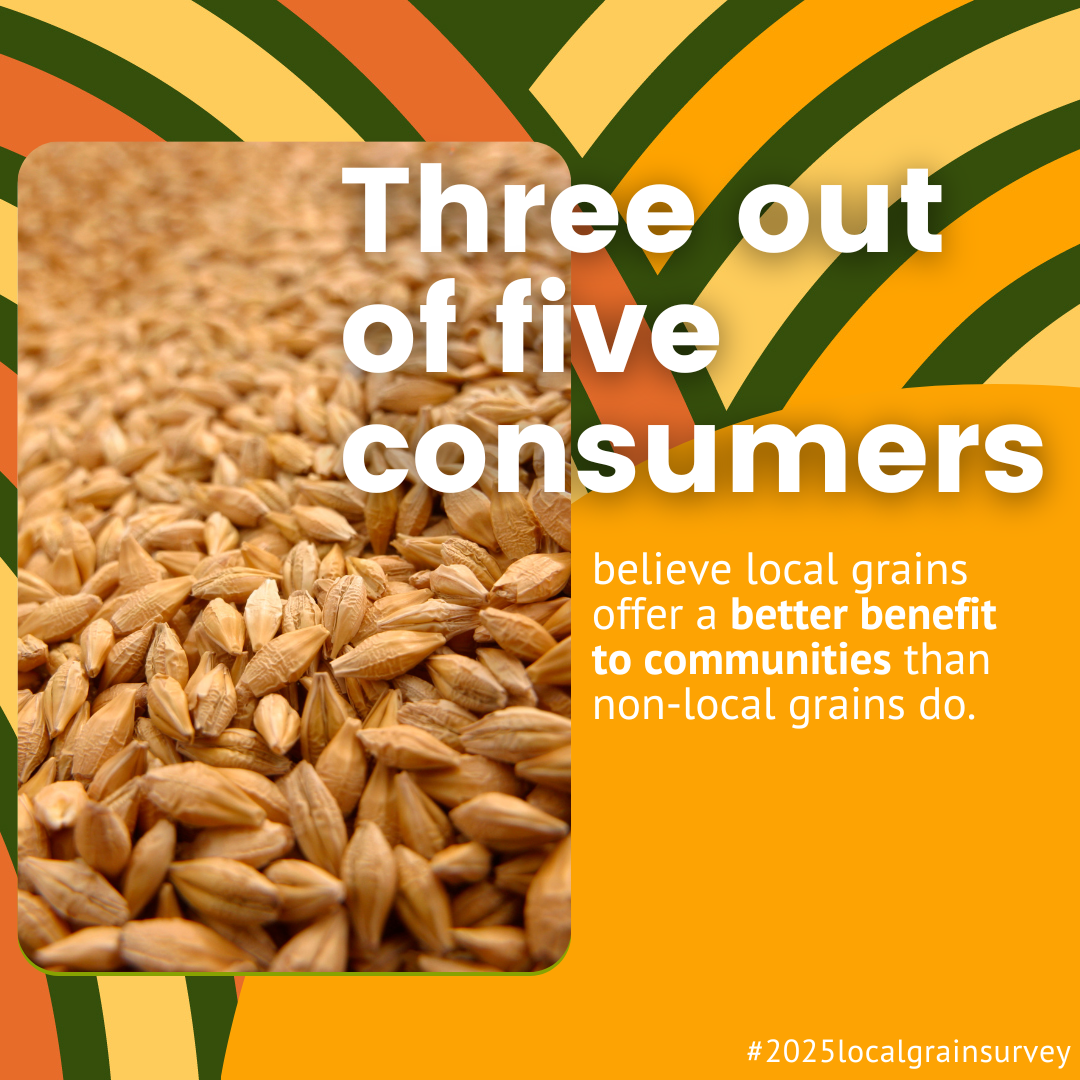
And here’s the good news: when people do compare local grains to commodity grains, they usually rate local grains as the same or better in nearly every category except price. Local grains tend to shine when it comes to freshness, taste, lower food miles, and support for local farmers.
Three Types of Local Grain Shoppers Emerged
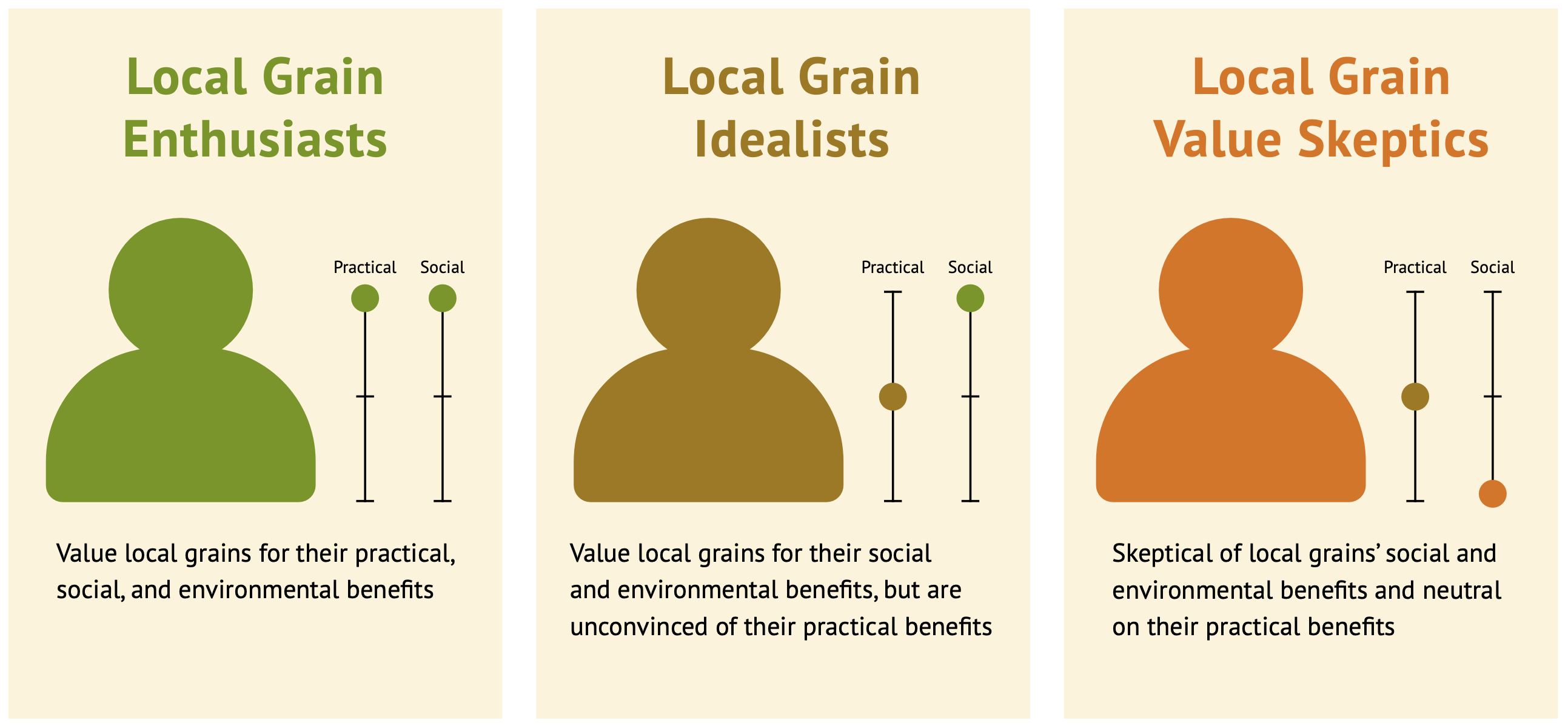
The team at UMN helped us run some more in-depth data analysis and identify several different consumer segments, offering us a way to group people who share similar values based on their answers. Three distinct consumer segments stood out:
1. Local Grain Enthusiasts
These folks love local grains for just about every reason: environmental, social, and practical. They appreciate freshness and flavor, but also value supporting local economies and caring for the planet.
2. Local Grain Idealists
They believe in the social and environmental benefits of local grains but aren’t fully convinced the taste, texture, or freshness are noticeably better.
3. Value Skeptics
This group is unsure local grains offer a real advantage, whether social, environmental, or practical. To them, local and commodity grains seem about the same.
These groups differ in demographics, shopping habits, and motivations, which means local grain businesses may have opportunities to tailor their messages (and products) and meet each type of shopper where they’re at.
Taste It, See It, Buy It: What Motivates People Most
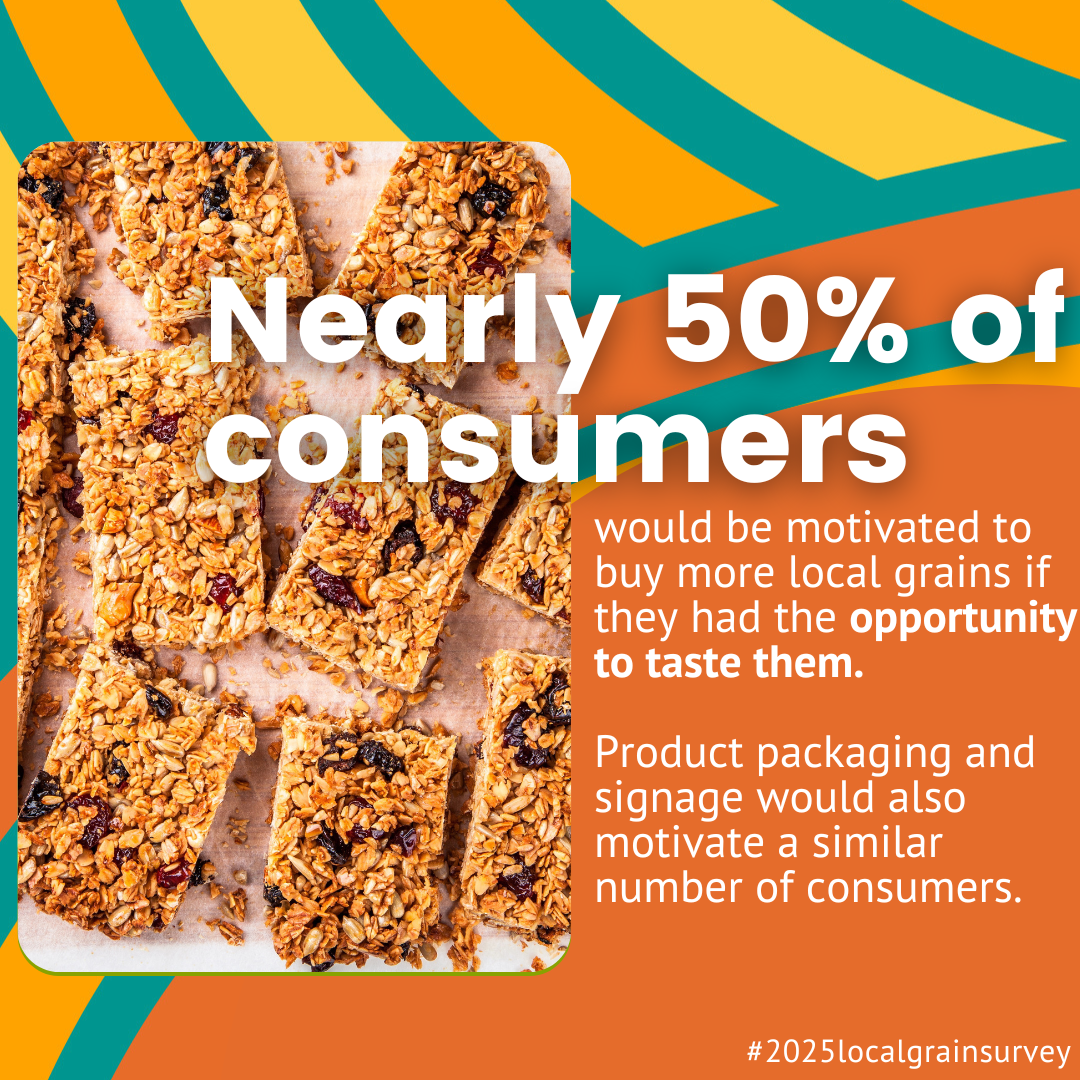
Consumers told us loud and clear what would help them buy more local grain products:
- Taste opportunities (48%): Samples at stores, events, restaurants, or farmers’ markets make a big difference.
- Better labeling and signage (41%): Shoppers want packaging that makes it super easy to spot local grain products.
- Information on true cost (39%): People appreciate understanding what goes into producing local grains – why they may cost more, and how they benefit farmers and the environment.
And on the flip side, the biggest barriers include:
- Cost (35%)
- Limited availability (31%)
- Hard-to-identify local grain products (29%)
If you’re interested in taking a closer look at our survey results, we encourage you to check out the full report:
Read the full Local Grains report here
You can also watch the recording of our recent Local Grains webinar where Rebekah Schulz, from UMN, walked us through many of the key findings. And if you’re still hungry for more grain-related data, check out the Whole Grain Consumer Insights Report we published in October. (Caroline)
To have our Oldways Whole Grains Council blog posts (and more whole grain bonus content!) delivered to your inbox, sign up for our monthly email newsletter, called Just Ask for Whole Grains.
Add a Comment