

Share This
Teff might be small, but its story is impossible to overlook. If you’ve ever enjoyed Ethiopian or Eritrean food, you’ve already met teff. Native to the Horn of Africa, this ancient grain has been grown for thousands of years and is the hero behind injera – the soft and gently tangy flatbread that serves as both plate and utensil.
A Grain That Goes Easy on the Land
Teff is part of the lovegrass family and has been grown in the highlands of Ethiopia and Eritrea for thousands of years. This dependable crop persists in difficult conditions and can survive in drought-prone fields due in part to its short growing season. Apart from its low water requirement to grow, teff is not dependent on heavy fertilizer. This allows U.S.-grown organic teff to perform well in conditions where other grains and crops might falter. Currently, researchers at the University of Nevada are studying drought-resistant and high-yielding varieties to help with water conservation for farmers out west.
Always Whole & Full of Nutrients
Whether you purchase the teff grain or teff flour, you’re getting the whole grain every time. The Whole Grain Stamp is an easy consumer favorite used to identify whole grains on packages when you’re at the grocery store. Studies have shown that eating 4-6 servings of whole grains, or 48-96 grams of whole grains per day has positive benefits on cardiovascular health. A ¼-cup serving of teff delivers around 47 grams of whole grain goodness. Aside from being a whole grain powerhouse, teff’s health benefits include:
- Fiber: Teff’s soluble fiber can support lowering cholesterol, specifically LDL levels, and can help stabilize blood sugar levels thanks to its resistant starch.
- Magnesium: This mineral is essential for heart health and helps to regulate blood pressure and ensure the heart functions properly to help reduce the risk of heart disease.
- Antioxidants: Polyphenols and flavonoids present in teff support lowering oxidative stress and inflammation and are found predominantly in the bran layer, which stays intact when grinding.
- Calcium: Vital for maintaining bone and tooth strength, teff has a greater bioavailability of calcium than other grains. Some studies have found that calcium levels in teff are as high as those of milk.
- Iron & Zinc: Important for helping fight off infections and supporting the maturation and metabolism of immune cells.
A Taste of Teff
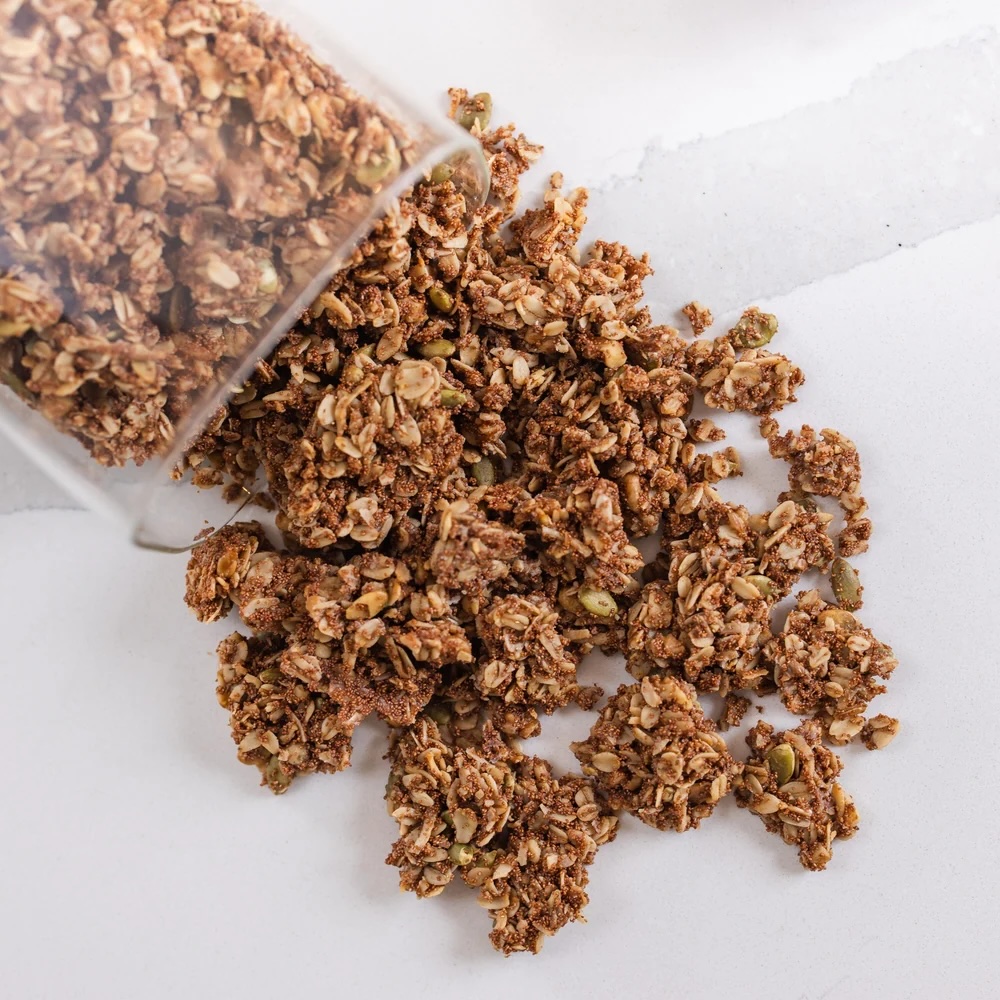
Each seed of teff is about the size of a poppy seed, making it the smallest grain in the world. Because of its small size, teff cooks quickly and makes a great addition to the table at any time of day. Teff comes in a range of colors, but the two most common varieties of teff are ivory teff and brown teff. Ivory teff is a milder, lightly sweet version with a milky flavor. This variety of teff is great in recipes like granola where it adds texture and balances beautifully with the oats and seasonings. Try adding it to your midday snack by pairing Greek yogurt and chopped apple with the granola sprinkled on top.
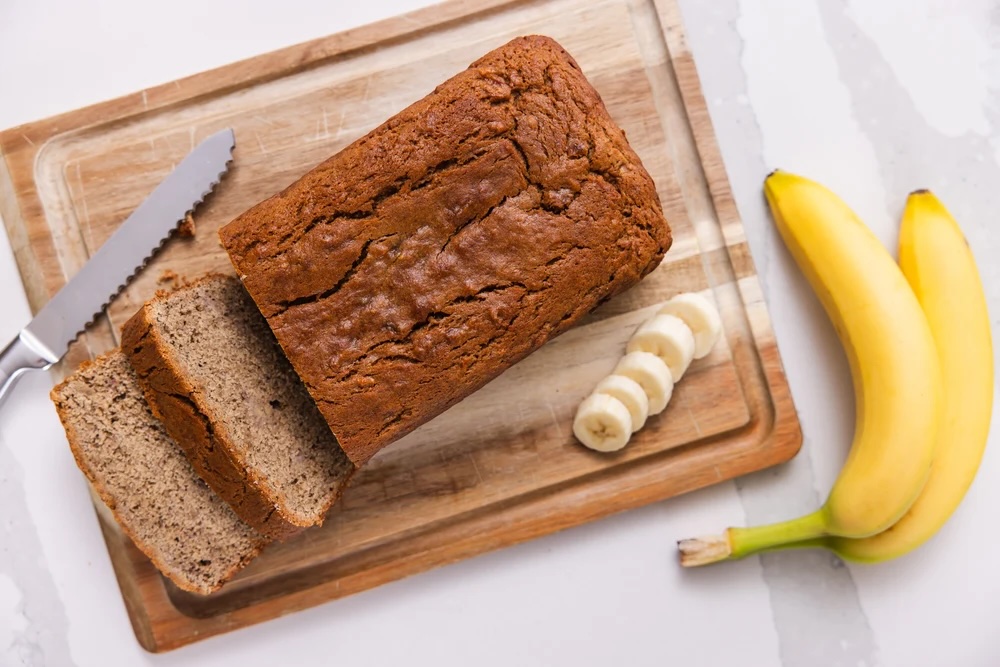
Brown teff is a nuttier and earthier variety that pairs well in this banana bread recipe, which utilizes teff flour with its subtle hint of cocoa. This whole grain breakfast option is perfect for busy mornings and would be great served toasted with a spread of peanut butter or a side of cottage cheese.
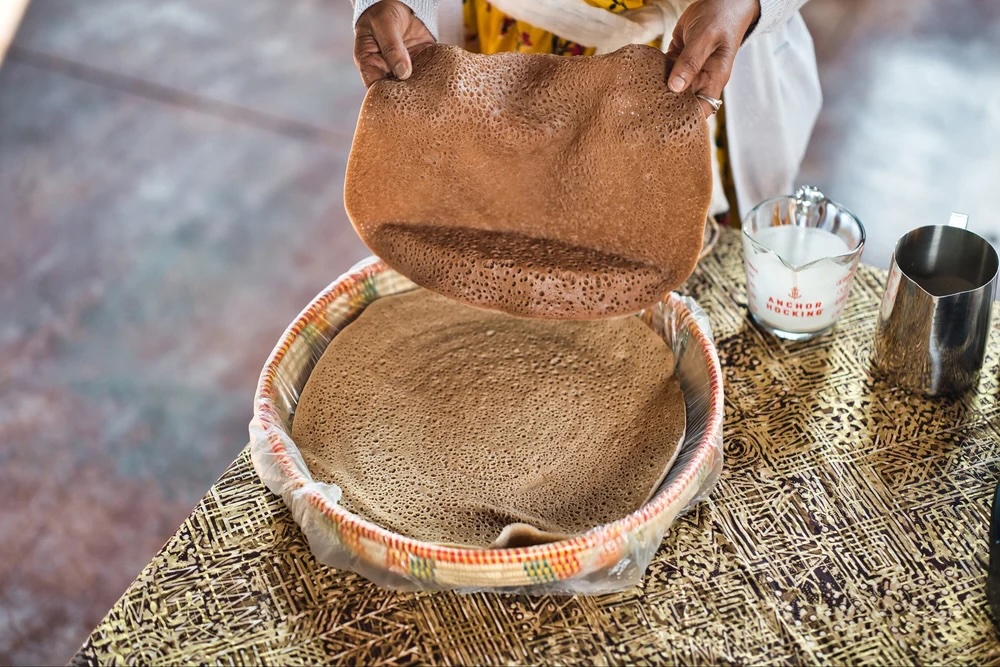
Experienced with teff and ready to take on injera? This staple dish is traditionally served with stews and is made by fermenting teff dough over a period of 1-2 days and cooking it on a mitad or rounded griddle for baking. Injera is traditionally eaten with the right hand and is used as the utensil to scoop and spoon dishes such as doro wat. Injera encourages a communal table, allowing everyone to share dishes.
To gain more insight on this small, mighty grain, we spoke with WGC member Maskal Teff.
WGC: Have you learned anything surprising about teff over the years of growing it in the US?
MT: (The) surprise is how resilient such a tiny seed is. A single gram holds thousands of grains, so planting, harvesting and cleaning it takes real care. In a dry year, teff will still produce a crop when many others would struggle.
WGC: What have Ethiopian and Eritrean customers taught you about teff?
MT: That quality matters. My dad first learned about teff as a guest of Ethiopian farming families who were proud to show him their crops. When families began arriving in the U.S. in the 1980s, many were making injera with pancake mix and other flours because they couldn’t find teff. Our first customers knew exactly what quality teff should be, and nearly 40 years later, they’re still our most important customers.
WGC: What would you like to say to someone new to cooking and baking with teff?
MT: Don’t expect teff to act like wheat. It drinks up more liquid, and batters turn out better if you let them rest for 15 minutes or so. You also don’t have to go all in. Swapping a quarter of the flour in your favorite muffin or brownie recipe for teff is a great way to get to know its flavor. Start simple and have fun with it. And if you ever get the chance, have injera at an Ethiopian or Eritrean restaurant. It’s the best introduction to what teff is meant to be.
This November, bring teff to the table. Whether you grew up eating injera at home, or you are heading to buy your first bag, this whole grain is an easy and rewarding addition to the kitchen.
— Bri dela Torre MS, RDN, CLC, Community Engagement Dietitian
To have our Oldways Whole Grains Council blog posts (and more whole grain bonus content!) delivered to your inbox, sign up for our monthly email newsletter, called Just Ask for Whole Grains.
Add a Comment